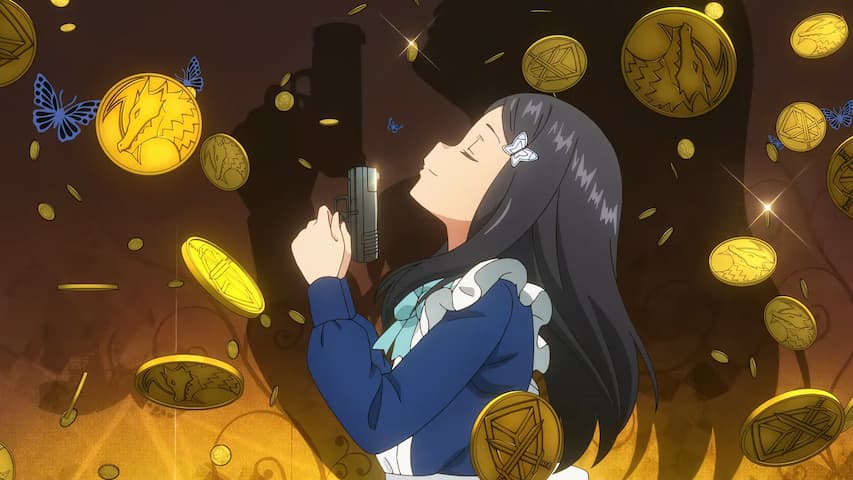
Playing Death Games to Put Food on the Table LN: Volumes 1-2
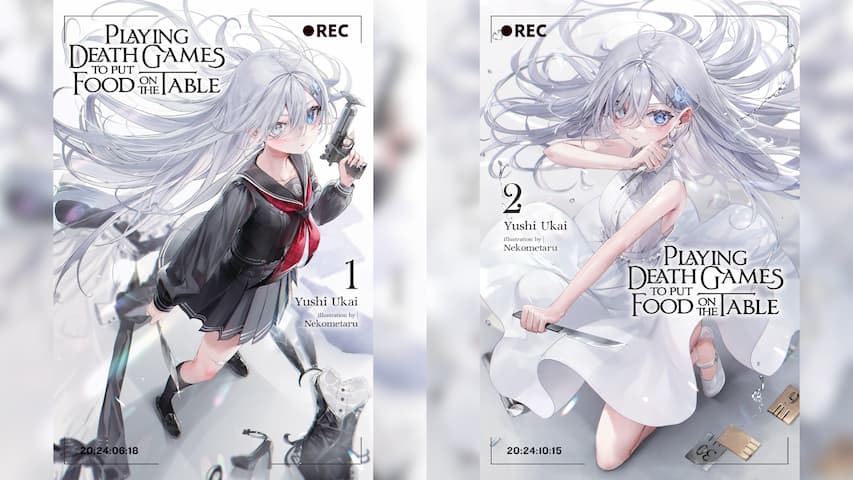
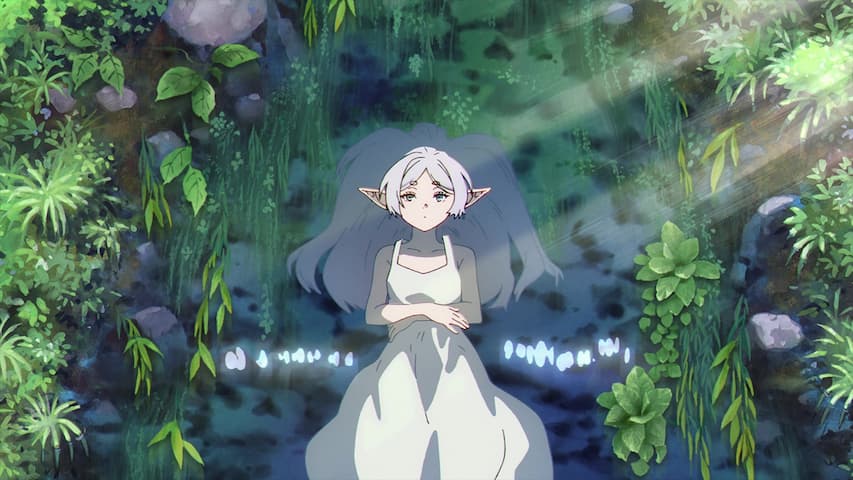
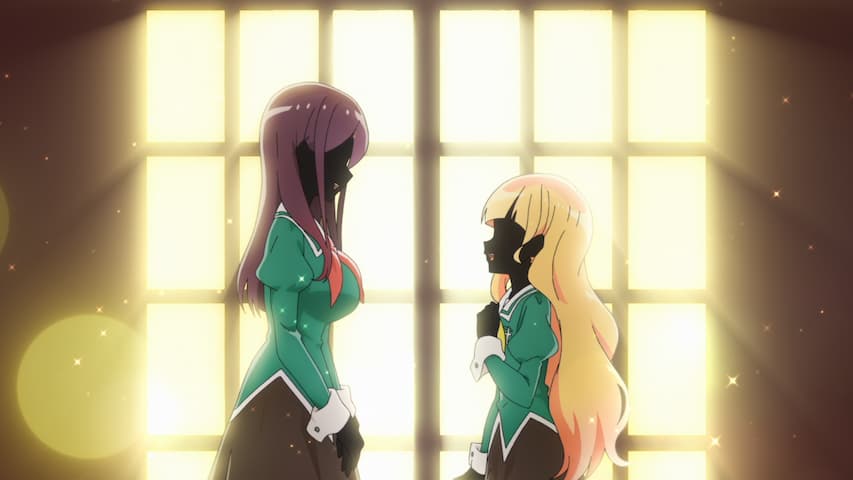
Ach ja, this will not be like my normal light novel posts, if only in part because I will not even pretend for a second that I read Shiboyugi for its own merits (I will also not be abbreviating it to PDGtPFotT). This is very much a situation where I am so fascinated with the anime adaptation itself as a product, that the original merely becomes a point of reference, instead of its own thing. This should not come as a surprise, at the very least for me, because this was also the explicit assumption with which I started reading the novels. Whatever the reasons are, I am so fascinated with the anime, they would surely not translate backwards to the novels. Shiboyugi is not a particularly dense story or one that excels with its character writing in a normal sense and the adaptation also looks very interesting, not because it is well animated, but directed with such clear intent and boarded to make the most of its format and medium. Quite frankly, the idea of experiencing this in written form was almost off-putting. Yet, I also could not stop being curious what could possibly inspire such an artistic adaptation. So, after a bit more than half a year, I randomly started reading and just a week later, I was through the first two novels. Here is what I have to say.
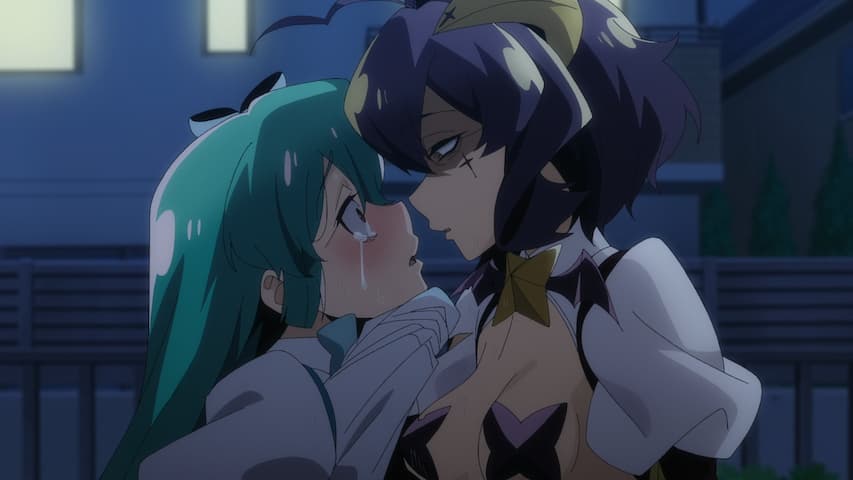
In a sense, I feel almost disappointed by how similar the anime is to the novels at times. Plot-wise, you can almost call it a very straight-forward adaptation, actually, with the biggest deviation being the restructuring of games, so that the anime can end on Candle Woods. I have seen this decision criticized multiple times now and while it can be argued how much it really matters and arguably even improves aspects of the story, I agree that it also actively contradicts its own chronology for different reasons that the larger narrative itself is not told chronologically. Funnily enough, I would still defend this decision for the very trivial reason, that ending a season of anime at the end of the second volume would be very anti-climatic. In isolation, the ending of Golden Bath and its epilogue is in itself just not that exciting outside of how it would transition into the next arc. So between finding out why Yuki wants to beat 99 games and Hakushi framing her own death and Yuki mumbling to herself that she played kinda bad, lost a few fingers and needs to lock in, else she won’t survive another toxic parasocial situationship, I too would have decided on the former.
Beyond that, as far as the light novels are concerned, it is mostly in the details. Neither the novels or the anime are that interested in the death games themselves, but the novels do give you a more complete picture of what is happening in and outside the games. I could go over every minor change (If I had them actually written down and not already forgotten the majority of), but most of them do not really matter outside of how they characterize Yuki and mostly serve to give the reader a better understanding of what is happening in the death games or act as further world-building, to the point one can actually start making proper theories without grasping as straws. It is not like the anime actively cuts this information, but the “Show, don’t tell” approach makes it harder to understand, for example, the concrete usage of the prosthetics or how the player’s agents are probably just former death game participants themselves, if the narration doesn’t explicitly hint at it.
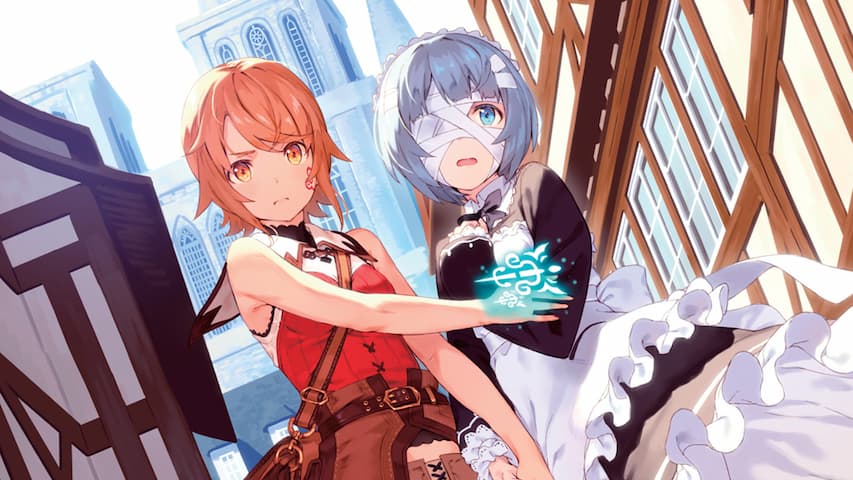
Though it is not like I do not appreciate having cleared up some questions I had about the death games at all. The setup for Golden Bath is not all that complicated and maybe I just didn’t pay enough attention, because my mind was just waiting for Mishiro and Yuki to kill each other on sight, but it seems that the small differences and obfuscations did seem to add up… that and Riko not getting randomly shot in the end, but electrocuted instead by Yuki’s clever thinking. In the first (or 28th, actually) game, Yuki goes over the preservation treatment and how these games typically tend to turn out in a lot more detail and later even on how the game masters play “fair” and don’t actively go against specific players. Also, Ghost House’s elevator now makes sense. To be fair, this was most likely the result of miscommunication between the script and background department, because no matter how much Yuki goes on and on about Momono’s body proportions being absurd in the novels, the girl’s chest and thighs were simply not as big as to weigh several hundred kilos. The anime also did a couple small changes, which make the games seem less silly at times. For example, in the room with the descending saws, the handcuffs appeared out of thin air and automatically attached themselves to the girls' wrists to bind them at the lever, whereas in the anime, the handcuffs were always there and had to be put on manually.
In hindsight, the only thing I wish the anime would not have glanced over so quickly is her waking up in her room before the Candle Woods game. Seeing Yuki in her apartment was already a sorry sight, but it is so much worse in the novels: Her only furniture is a bed and a fridge and she doesn’t even own a table or a single pan or knife, the room is full of trash, because she keeps missing garbage day and doesn’t know how to dispose of all the cardboard. Also, all the walls have mold growing on them, which caused her to throw out all her clothes, so the only articles of clothing she does own are the costumes of the games she participated in and two pairs of tracksuits she swaps in and out of whenever she goes outside, which she has to do for food, because the only edible thing her fridge contains are a couple slices of cheese she assumes have already developed magical powers. Girl might actually sustain herself solely on Konbini ice cream. If I hadn’t already fully believed her, that she possesses no life skills and wouldn’t survive in normal society, this would have surely done the trick.
Speaking of Yuki, she is arguably the one thing that can be argued to be different between the novels and the anime adaptation. Not because she is characterized differently or anything and it is actually scary how much of her actions and dialog is kept mostly intact. It is rather a question of presentation and how familiarized one gets with her inner thoughts. The novels are written in third-person past tense (Which is only note-worthy, because almost every other light novel I have read is in first-person) with the narrator mostly following the POV character of each chapter with an almost omniscient insight into their psyche, to the point it could easily double as simply the characters thoughts on top of when their thoughts are directly spelled out. This differs from the anime, as we mostly observe Yuki as just another death game player without an insight into her inner world, with the exception of when we do get one explicitly, which I always dubbed as a “dissociative” episode, which should not be taken as either reliable narration or at face value… in case the anime’s literal presentation didn’t make it clear that she doesn’t actually exist in a black void half the time and only watches the events projected on a screen, while she both narrates and voices her own thoughts in first- and third-person.
The result is that light novel Yuki is a way less ambiguous character when compared to anime Yuki, whose actions have to be interpreted by the viewer first and leave room for variance. For me, light novel Yuki is a lot more confident in her own views and in interacting with the other players. When Yuki explains why one should only mourn the dead after surviving the current game or why cooperation is preferable, it reads more like personal conviction, unlike anime Yuki, whom I interpreted in this regard as only having learned it over time, not just as a survival strategy, but also as something that should be done as a proper human being. Like, I find it hard to believe that Yuki started out with having found purpose to mourn the fallen players in the first place. Light novel Yuki also gets a lot more angry, both outwardly and on the inside, mostly in regards to how other people confuse her in social interactions or when she feels slighted, while anime Yuki was mostly either mildly confused by how other people act and treated her or kept her emotions bottled inside, until they exploded. In the anime, while fighting against Mishiro, she looked to me a lot more pathetic and like the biggest fake idgafucker trying to survive, while light novel Yuki is very much “I don’t mind dying, as long as it isn’t to that bitch!”. Like, girl? Language! Another effect of the narration is that the reader knows what she notices and what she doesn’t. Again concerning the elevator in Ghost House, the maximum weight was shown on a digital screen, at which Yuki became angry, because since the amount of weight is clearly arbitrary and adjusted to the amount of survivors, it means that no one needed to die until now, for which she didn’t necessarily felt responsible for, but still tried to prevent either way. In the anime, no one seemed to acknowledge that the maximum weight was set specifically to accommodate four survivors (To be fair, it was an analog flip clock style display, so I am not judging for overlooking that).
This is also even more extended to how she feels and what she thinks about the other death game participants, though another part of me has to question how much the narration is for informing Yuki as a character and how much it is for the reader specifically. Despite being about young women being put in essentially cosplay and dying some pretty gruesome deaths, the series as a whole is very tame, maybe even nonchalant, in regards to the inherent sexualization and violence at hand. Even the anime handles this about as tactfully as is possible for a visual medium, with only the manga adaptation falling into (unfortunately) expected behavior, but more on that later. The point is, that it sometimes creates wild whiplash when it does get close to such territory, where it is hard to decide if something is more in line with fanservice or not. To keep taking the Ghost House game as an example, it seems Yuki fought a whole other battle in parallel: I already mentioned how Yuki kept on rambling about Momono’s body and outfit, but in general, she seemed to appreciate being surrounded by cute girls, very much enjoyed getting in contact with the others' hands when they stole her snacks, to the point she could make out which one belongs to which in the saw room, did not mind carrying Kinko on her back at all and even got to feel like a harem protagonist when everyone started clinging to her while searching the key, to the point Kukuto even made fun of her. The last scene specifically is shown in the anime, but you would only get that vibe with the insight of the light novel. Then there was… I am just gonna cite the passages instead:
Kinko’s turn ended without much fanfare. Her legs were so thin that it seemed like someone could rip them off with their bare hands. Still, Yuki gripped the blade and aimed for the girl’s groin while Momono and Beniya pinned down Kinko’s arms and legs to the floor. Yuki was able to fully overcome her hesitation to perform the procedure. In fact, she felt an almost guilty pleasure at the sight of two maids physically restraining Kinko.
Playing Death Games to Put Food on the Table Volume 1, Chapter 1 (19/23)
I don’t know why, but I find the image of Yuki suppressing her excitement about slashing the leg of a girl she has continuously compared to a puppet being held down by two others following her orders, almost hilarious. Not quite as in a Reverse Darkness situation, but it is not hard to believe that some people would be into that. Then there is also this one directly afterwards:
Yuki placed her hand on Momono’s thigh. She’d never imagined that this was how her wish would come to fruition. She felt greatly troubled, but at the same time, the thought that the deed had to be done lit a fire in her. Perhaps this was how art restorers felt about their jobs. She did the amputation beautifully, without leaving a single scratch.
Playing Death Games to Put Food on the Table Volume 1, Chapter 1 (19/23)
In context, what is happening isn’t even that weird, but the slight shift in prose and how the narration describes the events and Yuki’s perspective genuinely makes me guess if it is supposed to portray Yuki as capable of having fun in a very macabre way, or if it is levity for the reader at the idea of the girls going at each other in a way that is not strictly coded in a sexual way, but can still be followed up by “Low-key hot, not gonna lie.” and “Damn, I wish that were me.”…purely hypothetical of course, I obviously wouldn’t know *insert side-eye emoji here, which somehow doesn’t exist*.
Speaking of the narration, I initially called it almost omniscient, but this doesn’t mean it is objective. The narration can be casual and light-hearted at times (Chapter 1 (19/23) is so macabrely funny to read, considering its content and going on about how the costume gods had forsaken her is almost unimaginable for anime Yuki) and especially the beginning came off as more of a recollection of Yuki’s memories or a passive-aggressive commentator, rather than just a narrator simply telling the story. There was this one time the narration basically called Yuki stupid, because she couldn’t describe the room she was inside adequately enough. Another time, it was almost judgemental about itself, as if there was no point in the grand theatrics of the narration itself when it comes to death:
Three sounds rang out in rapid succession.
The first was the sound of a flying object lodging itself into Kokuto’s head, a noise so small and crisp that it defied all expectations of a human brain being pierced. The second was the thump of Kokuto falling over from the momentum of the blow to her head after being deprived of the ability to stand on her own. And the third was the jingle of the bunch of keys falling out of her hands onto the table.
Technically, there was also a fourth sound—that of Yuki’s chair toppling over. She had stood up with such vigor that she accidentally kicked it away. But that was all. Be it three sounds or four, there was nothing else as Kokuto’s life came to an end.Playing Death Games to Put Food on the Table Volume 1, Chapter 1 (9/23)
I really wish the author would have kept the narration style of the first chapter, as it becomes a lot more clean and clinical going forward and because those random moments reminded me of those scenes in the anime where Yuki would introspect in a kind of out-of-body experience. The TL;DR of it all is that the light novels and anime have a fundamentally different vibe going on, even if the content would have been the exact same. Despite essentially being the same character, I do not consider light novel Yuki and anime Yuki to be the same, or at least different enough to judge them separately.
Looking at the rest of my notes, I think the only thing left to talk about is what the anime actually adds over the light novel, which technically does not belong in this post about the light novel, but who is gonna stop me? While the anime likes to portray certain plot beats differently, like Mishiro’s entire monologue about how much she is disappointed in Yuki being turned into another death game with her and Yuki wearing wedding dresses, it also has a couple scenes, which are completely anime original. This mostly consists of giving a bit of extra material to the side characters, like Kinko looking back on her past after her attempted suicide or Kotaha falling in a kind of loop about the meaning of her real name, after the mine blew off her legs and being left behind in the Scrap Building game. But by far the biggest addition came in the form of Kyara and Moegi. In the light novels, Kyara and her protégé are barely characters, despite having a quite significant amount of presence in the Candle Woods game. This mostly comes down to the fact that, outside of maybe Mishiro, none of the characters aside from Yuki have any kind of dynamic going on with each other, outside simply existing for the purpose of another. This mostly works on a thematic layer, but gives the reader not a lot above another girl that may die or survive another game. In the anime though, these two get a lot more focus and are properly built up as different aspects of Yuki to confront herself. Additionally, we get to see some of their (and to a certain extent Airi’s) past, how they lived outside the games and what motivated them to pursue them in the first place. In the grand scheme of things, their narrative purpose stays the same, but in the anime, Moegi actually feels like someone that has a reason to live or properly freak out once she realizes who is also in the game and Kyara is way more than just a simple sociopath that started killing people, because her clothes fitted too tightly. Candle Woods is all about finding purpose, so having two of the characters defining Yuki’s being given both a proper dynamic between one another and able to play off of Yuki is easily the best change and addition the anime did, because just reading their parts in the novel made me almost sad for those two. That, or I just loved episode 9 too much.
And that basically sums up my experience with the first two volumes of Playing Death Games to Put Food on the Table. I initially wanted to stop reading after the first volume, but still stuck with the second one, because why would I not read the volume about Mishiro at this point? It is not because I think the light novels are bad, but they are simply not something I am too interested in on their own that much and especially with the anime as comparison, I know which one I prefer. As mentioned in my season wrap-ups, I don’t even consider Shiboyugi to be that good most of the time and reading it in “proper” order makes it even more obvious how flawed or inconsistent it is with its plotting. To defend the ending of the anime once again, I love how it really nails home how, just because Yuki considers herself to be not built for normal society, doesn’t mean that she is built for the death games, so even when she finds her motivation to keep playing them, there is a tragedy to it, because outside of the being mechanically good at the games, there is actually nothing of value in participating in them for her. Hence, she breaks down, even with her “I am going to beat 99 games” spiel. In the novels, simply going from Candle Woods to Golden Bath left me feeling nothing for Yuki. She may get better, she may get worse, but what do I care about at this point? So even when I am interested in how Cloudy Beach went in the novels or even what happens beyond that point, I doubt I will continue reading. At the very least, it is definitely better than what I have read of the manga, because the manga adaptation is the exact opposite of the anime for me, as it further exacerbates all the friction I already have with the original story.
Man, my relationship with Shiboyugi is weird. Also, this post is made up of 1.3% the word “Yuki” and only 0.1% “Mishiro”.
Related Posts
Comments