The Amazing Digital Circus: Coming to terms with who you are
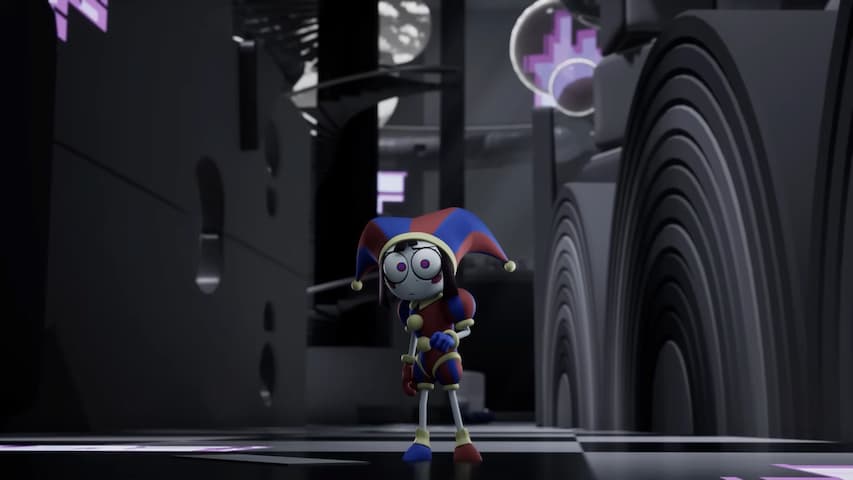
Ach ja, as of writing this opening paragraph, it has just been around an hour after leaving the cinema for The Amazing Digital Circus: The Last Act and two things still hold true: I wish those three teenagers (presumably) that sat behind us a bad day. Not a horrible day, but just a bad one someday down the line. The other one is, that I am still baffled that I have gone to a movie and, beyond a dumb reference, didn’t lose a single word about it afterwards. I was not lost for words, nor did I not have any thoughts about it, just that I didn’t feel like sharing them, because it would be so redundant. This does not mean that I didn’t enjoy the finale of The Amazing Digital Circus, but rather that there is nothing really new to discuss. As such, let’s talk a bit about The Amazing Digital Circus in general. Also, I will abbreviate the name as TADC, because I will not write it out in full each time. Spoilers ahead.
I would be surprised, if I were the only one to notice how TADC is an almost quintessential Gen Z experience, or rather how it embodies the idea that Gen Z is living in a world that was not built for them and we are solely inheriting the ruins. Neither the general story, nor its structure, are distinctly unique, after all, we have been doing existentialism since forever and TADC itself is clearly inspired by I Have No Mouth, and I Must Scream, a story at this point almost 60 years old. Something similar to TADC could have come out in both the past and probably the future, but TADC specifically? I can only really make sense of it as a product of the 2020s for people in this specific zeitgeist.
Like with almost all horror and horror-adjacent fiction, it is often a lot more interesting to analyze its horror elements through what they represent and which specific fears are tackled. Not to recap every video essay that talks about horror media ever, but there are certain material and societal realities that made “Psycho slasher terrorizing young women in the suburbs” such a common staple in the same way haunted houses, every religious imagery and literal monster were before it. Similarly, the new generation has its own reservoir of tropes and aesthetics. Analog horror is surprisingly popular, because, while digital natives may not have interacted with such older technology directly, we are still very much familiar with it via references, cultural osmosis and the fact that our world was built by it. The slight disconnect is the point, in the same way why the setting tends to be something that once was in its prime for the generations before us, but is currently just a shadow of its former self. Think of Five Nights at Freddy’s and liminal spaces like the Backrooms (The recently released The Backrooms movie being surprisingly successful). Themed restaurants, those large monotone cubicle offices and communal spaces were a thing of the past, but for anyone born in the new millennia, these are not part of their actual reality, so the only image left is of their decay. Similarly, urban exploration doesn’t really make a lot of sense, if the thriving shopping malls and factories weren’t all abandoned now. It is not an apocalypse, but clearly something happened and if we don’t want to accept it, at least acknowledging it might have value in itself.
Similarly, there is just a fundamentally different view on life, on relationships or even more concrete stuff like technology. I wouldn’t necessarily say that most modern media has a slight tint of nihilism to it or succumbs to defeatism, because the world is already fucked beyond repair, but nothing or no one can pretend anymore that everything is fine or that there is nothing to worry about. The American dream was never real, but who in their right mind wouldn’t scoff at the sheer audacity of it today?.. And I am not even American. Being successful, owning a house and building a family? We are barely surviving, both physically and mentally. Philosophical and cautionary questions like “What if a computer causes real life harm?” or “Imagine a company controlling parts of your life” became a lot less interesting, because what do you mean “if”? And who knows how much Covid has utterly destroyed the concept of normalcy in so many small aspects of daily life. We do not need the supernatural anymore, because those incomprehensible happenings come from some place very unspectacularly real and mundane. Whether you find yourself in machinations beyond your control or not, you wouldn’t be “fine” either way.
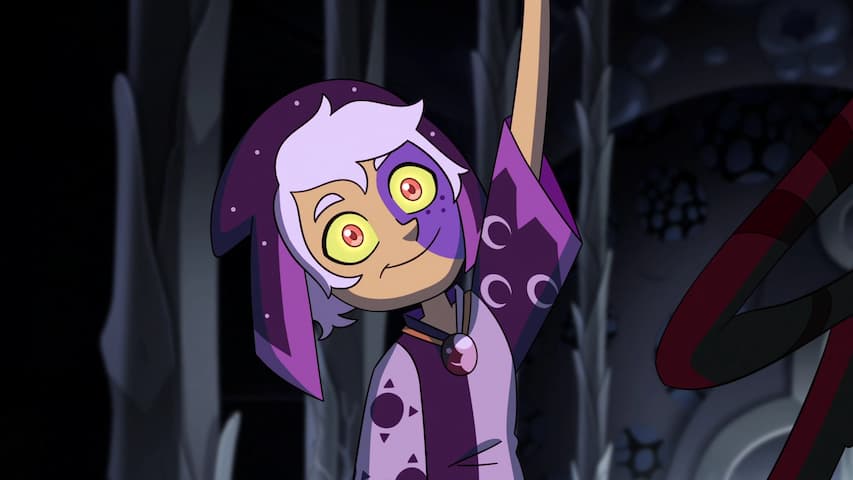
This is, for what I am concerned, where The Amazing Digital Circus finds itself. On the surface, the horrific core is that you are stuck with strangers in a space you can’t leave and that is controlled by a psychopathic figure whose intentions are a mystery. In reality, while the setting and make-up of the premise serve as the driving force and development of the story, it is also barely important to the actual horror the character’s experience. The titular circus, in all its early-3D and Saturday morning cartoon glory, evokes nostalgia for a time none of the characters probably ever experienced and being represented as an avatar with a new name is most likely not unfamiliar territory to anyone under the age of 30, who is aware that there exists some degree of separation between the real and the digital you. Of course, Pomni has every right to be freaked out about the whole situation she finds herself in, but it also doesn’t take long to find out that she isn’t, at least, in physical danger and her iconic mixture of both breakdown and acceptance at the end of the pilot episode really spoke to me. None of the characters want to be there, yet there they are, so they have to come to terms with this fact one way or another and coming to terms with it is, in fact, the whole point.
While there is no physical harm in this world, as everything mostly runs on either computer or cartoon logic, the characters are still very much human. Some specific details of their past may be missing, but everything else remains and this includes all the fears, burdens and regrets they brought into this world, which are just one unfortunate adventure of Caine’s away from being brought to the forefront. Abstraction, arguably the only real consequence that can happen to the characters, is less so losing one’s mind and more so not being able to handle everything anymore and as a result losing oneself by becoming a monster that only lashes out. You can argue about the literal in-universe reasons for why a character abstracts, but especially with the hindsight of the events in the last episode, for me, it is like the loss of oneself in the most literal manner. There is a certain paradox in realizing and acknowledging the reality one finds themselves in, while also simultaneously not being able to accept it. It creates an irregularity that either continues to struggle in this endless limbo or puts an end to it all by not continuing to exist. In a sense, it is death. Neither murder or suicide, but simply the loss of oneself, as what makes you “you” is not compatible with the world.
In this sense, it is interesting to see how the cast of TADC learns to cope with being stuck there: Pomni believes for there to be a way out, so there is a point to not give up or to at least to not abstract. Ragatha finds purpose in taking care of the other inhabitants, as she almost accepts to be stuck there forever. Gangle almost finds a sense of security in the digital circus, because the prospect of returning to the real world also means confronting everything she runs from. Zooble keeps themselves grounded by simply not engaging with most of the stuff Caine throws at them. Kinger… he might have actually gone a bit crazy, but more so in the “not being able to fully absorb reality anymore” kind of way. And lastly, Jax just straight-up denies the reality in front of him as a way to not be hurt by it.
It is not surprising that the threat of abstraction comes from putting this belief under the test. Sometimes you defeat your demons, sometimes they break you. But it is also that you only really seem to abstract, when there is truly no one left for you to care anymore. Jax eventually abstracted, when even Ragatha and Pomni stopped bothering to give him a helping hand and he was left alone with his thoughts that started to brickle down after the deletion of Caine and what he assumed that would mean for him. It is not that no one cared for Jax, I think the end makes that abundantly clear, but rather that no one was there when he needed it the most, so when he finally couldn’t lie to himself anymore about the situation he found himself in, there was nothing left for him but to abstract. Sometimes, coming to terms with yourself doesn’t just mean accepting all the bad and ugly characteristics of yourself, but also the consequences that come with it.
When the last episode will eventually hit YouTube, I can only imagine the ending to be quite divisive on a lot of layers. There is a very deliberate lack of catharsis or any kind of resolution one could have hoped for, considering the set-up of the series. No one is getting out, Jax abstracts with possibly no chance of ever returning and we don’t even get a variation of the “Congratulations Shinji” scene as some form of conciliation. Caine returns with some answers, whose legitimacy can be questioned, everyone takes the news pretty well, all things considered, and when everything is said and done, the only thing for them left to do is start living by making the world truly their own.
Ironically, my initial thoughts about the ending were that it was too positive, which more so shows how big of a cynic I am able to be. It is not a fairy tale happy ending by any stretch and purely narratively speaking, this is the way you want to end those characters' journey, especially when it is actually quite grounded and, dare I say, “realistic”. It just leaves a funny after taste, that it also just turns into a montage of the entire cast getting affirmed and their worst fears being disproven. Like yeah, Pomni has friends, Ragatha left her abusive mother, Zooble found a purpose and Jax isn’t homeless anymore. But getting just straight-up told it by Caine, after he looked up everyone’s social media profiles also rings a bit hollow. After being confronted with the question, that maybe you should quit your artistic aspirations and become a cog in an uncaring machine that turns you so much into another person, that you can only rationalize it as putting on a literal mask and maybe it is for the better that you were hit by a car, because the world truly does not need yet another teenage girl drawing manga… maybe, just maybe being told, that Gangle simply quit her fast food job, attends university now and started her web comic is not quite on par with what came before. I am fine with the characters finally getting their closure and being able to “start anew”, but a part of me wished it would have happened through a different kind of self-realization.
My biggest complaint about the final episode is that it doesn’t really add a lot of new meaningful elements. Sure, we get some concrete answers to our questions about how the world works and why certain events happen, but for the most part, it just reiterates Pomni and Jax’s character. Like yeah, everyone should already know why he acted the way he did and why he eventually abstracted, to the point that him being abstracted was treated so unceremoniously (Much to the dismay of the three people behind us, apparently). On the other hand, I have to applaud the sheer execution and while I dislike a lot of the dialogue, the visual presentation just gets it. It wasn’t quite Evangelion, but the fact I am willing to pull out this comparison should mean something.
And that’s about it. Is half the post me just massively projecting? Of course it is. Isn’t that exactly the whole point with stuff like The Amazing Digital Circus? There is arguably a lot of value in putting in the effort to properly analyze this series and getting my thoughts in order, but I am also just glad that the series finished on a decent note and I am allowed to be mentally done with it. One other guy in the theater mentioned that the series leaves enough threads unexplored to continue the series in some capacity, and while this is also in the nature of such a series, I am content. Do we need a proper confirmation that Pomni ended up there, because she went exploring the old C&A building and got her brain scanned when putting on the VR headset? Is there value following the characters after the events of the finale? So what if the last shot mirrors the ending of the pilot? Is there actually some gender-nonconformity going on, or is the image of Jax in a maid uniform just too alluring to pass up on?
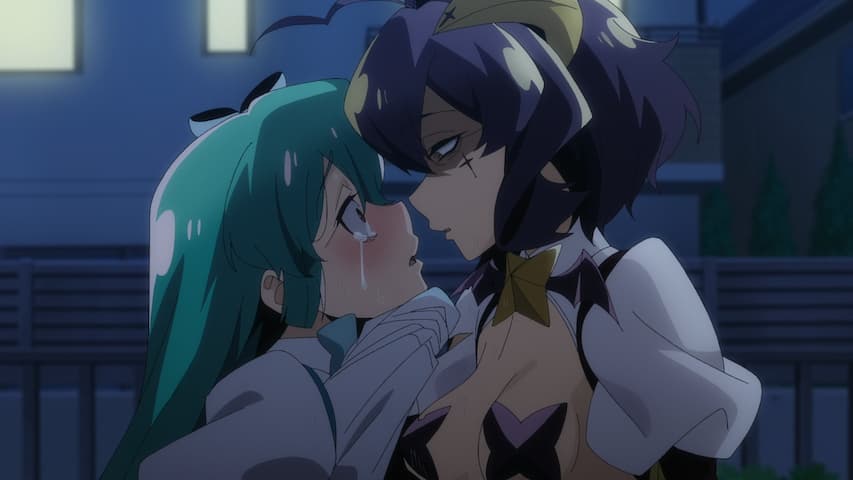
In the original I Have No Mouth, and I Must Scream, AM eventually turned Ted into something barely resembling a human anymore, less so for his own amusement, but piece of mind, so that his eternal display of hatred could truly go on forever. Maybe we should be glad that everyone else got to escape such a fate. But maybe even more importantly, while I appreciate Abstragedy being canon, I think the ending would have been massively improved by at least five uninterrupted minutes of Pomni and Ragatha making out.
The Amazing Digital Circus is available on Glitch Productions’s YouTube channel and Netflix.
Related Posts
Comments